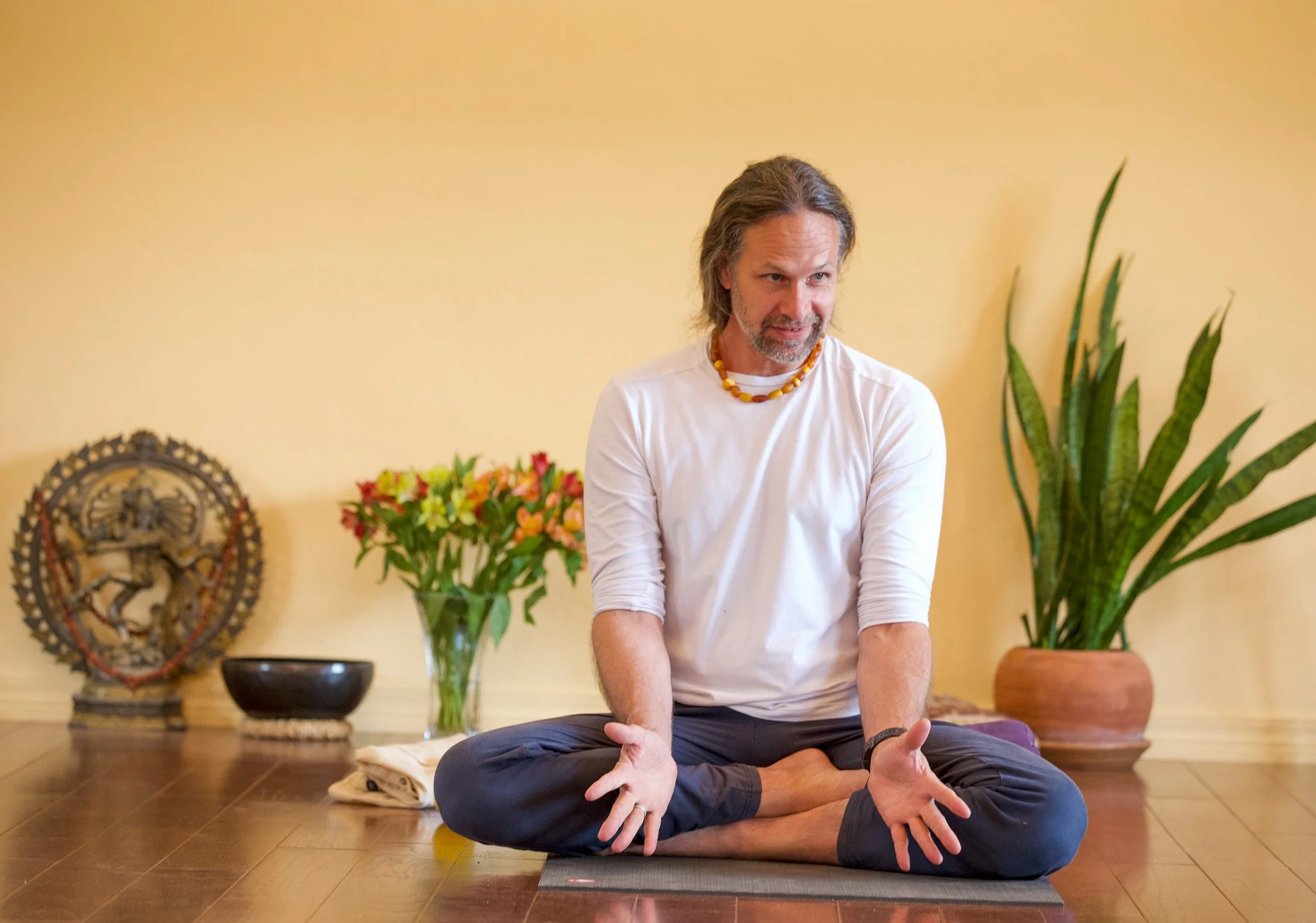
Online 200-hour Ashtanga training
About this training
The practice, the philosophy, and the healing arts, studied from wherever you are in the world.
This training grows out of my own years with yoga, and it holds everything I wish I had known when I was starting out. You do not need experience to begin. If you are new to the practice, we start at the beginning and move slowly enough that nothing gets away from you.
The philosophy is taught by the Sanskrit scholars of Mysore, in their own words: Dr. H. V. Nagaraj Rao on the Sankhya Karika and the Yoga Sūtras, Dr. M. A. Alwar on the Bhagavad Gita, and Śrī B.N.S. Iyengar on the practice he received from Śrī Kṛṣṇamācārya.
The philosophy here comes out of many years of going back to Mysore to study. I recorded these lessons so that anyone who cannot make the trip to India can still sit with these teachers and hear the depth of what this tradition holds.
Alongside it you learn the Primary Series in full, as it was taught to me in Mysore: how to practice it, how to adjust it, and how to lead it. There is also prāṇāyāma, mudrā, Sanskrit, Ayurveda, and therapeutic work.
If you would like to deepen your education in yoga, please get in touch. If cost is the obstacle, write to me before you decide. We keep a real open door.
The curriculum
One path with three studies.
Study One
History and Philosophy
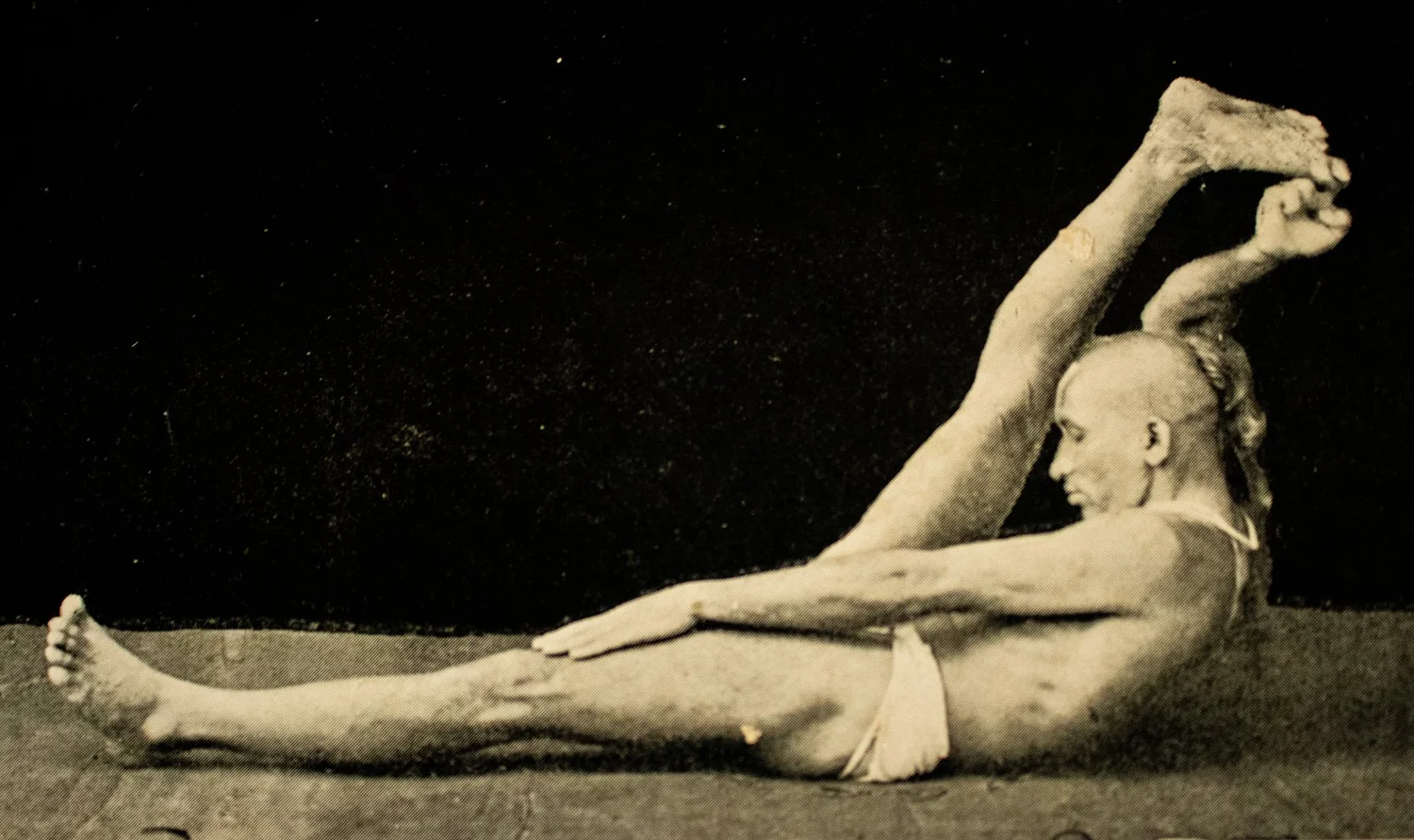
Here we learn the theoretical foundations of yoga as well as its history. We begin with India's oldest philosophy, Sankhya, upon which the Yoga Sutras are based. Then we move into the Bhagavad Gita, which is closest to the heart of Mysore. Each text has its own course, with video, audio, and written notes for an easy and enjoyable learning experience. The philosophy is taught by Śrī B.N.S. Iyengar, Dr. H. V. Nagaraj Rao, and Dr. M. A. Alwar, all legendary Sanskrit scholars with a lifetime of experience.
The whole study trains one faculty: viveka, learning to see clearly.
Study Two
Yoga Methodology
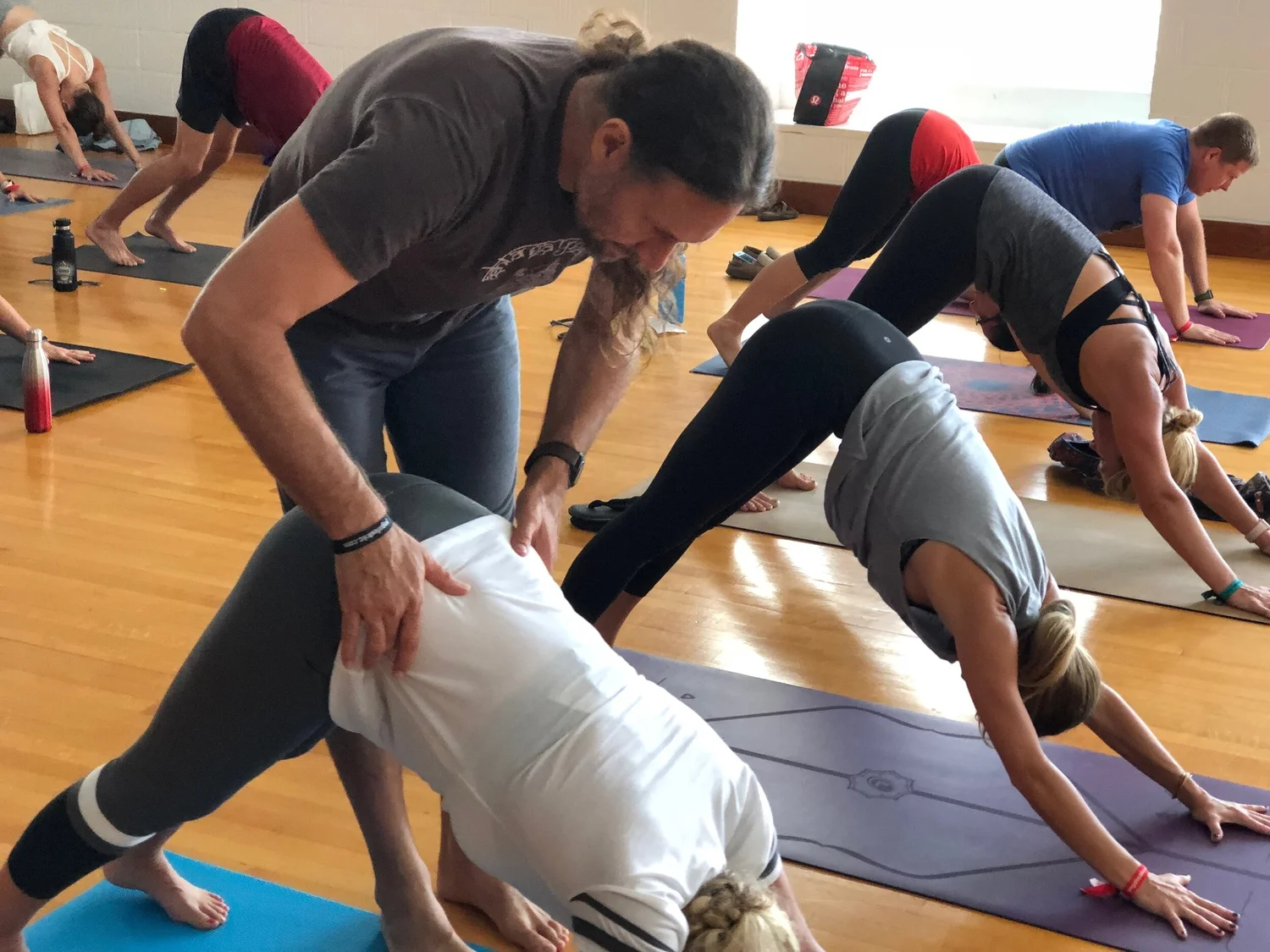
You will learn every posture in the Primary Series, how to practice it, how to adjust the postures, and how to share it with poise. You will study the vinyāsa count and Sūrya Namaskāra in detail, with tutorials on adjusting all of the postures safely. Apart from āsana practice, we also cover prāṇāyāma and mudrā, and you will study the original Ashtanga Yoga syllabus as it was shared by Śrī K. Pattabhi Jois in the early 1970s. The aim is to give you the confidence to begin leading classes and sharing yoga.
First you practice. Then, when you are asked, you learn to share it.
Study Three
Yoga Chikitsa
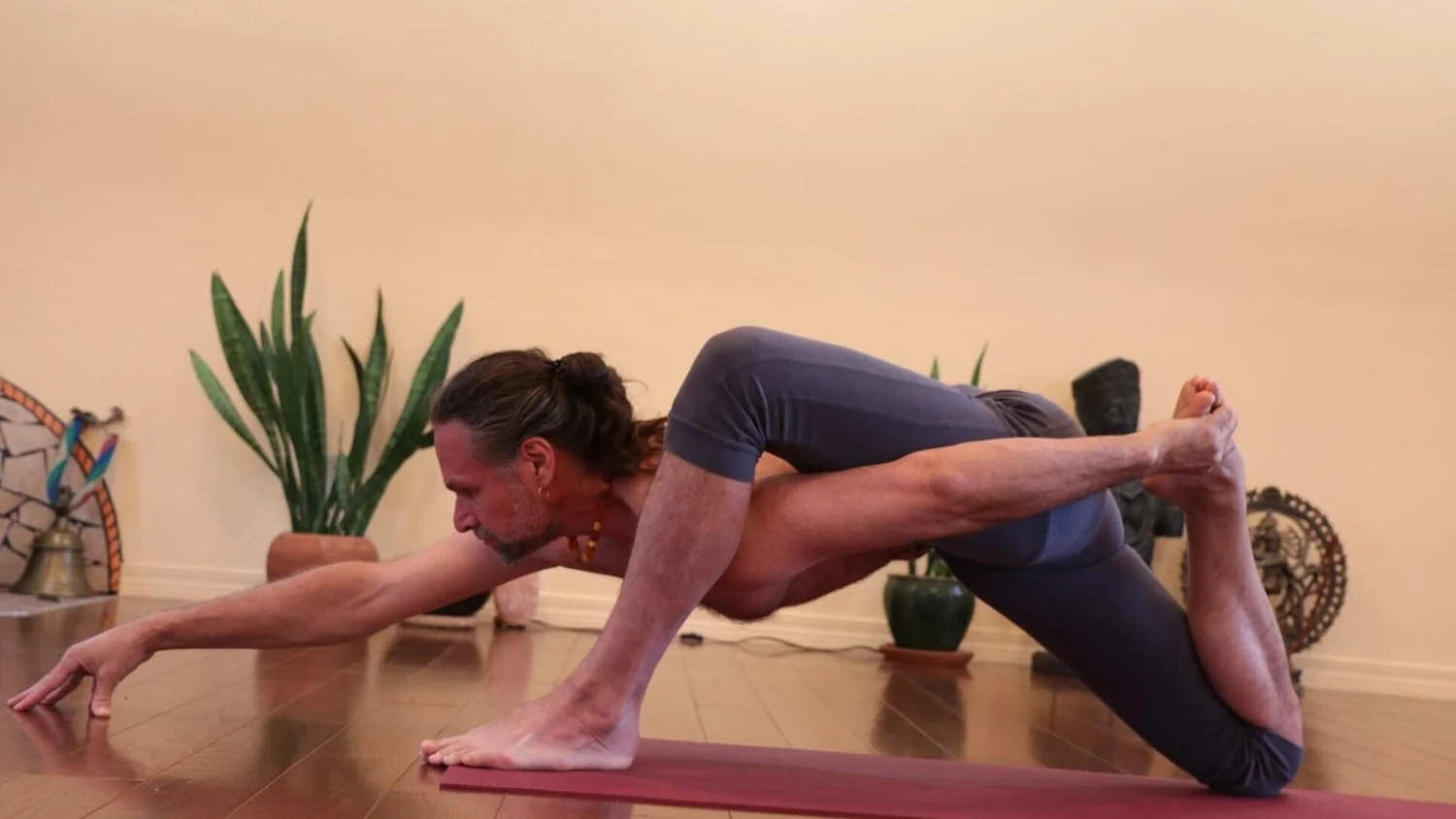
Yoga Chikitsa is the therapeutic side of the practice. Here you will learn basic physiology and anatomy, and how to understand the body through the lens of yoga. You will study postural analysis, how to recognize imbalances in the body, and how to work with them in practice. This section includes Thai bodywork, Ayurveda, and many therapeutic movements.
The first rule of the work: never tell anyone you can fix them, but give them the tools to fix themselves.
What it is like
Here is what it actually looks like. You roll out your mat in the early quiet and move through the Primary Series, breath by breath, until the sequence lives in your body and not only in your memory. Later, out walking with a lecture playing in your earbuds, you hear a scholar in Mysore move slowly through a single line of the Yoga Sūtras, the way it has been studied there for generations, and an idea you have been turning over for weeks quietly settles into place. None of it arrives all at once. It accumulates.
How the year works
A year of study, in your own hands.
The curriculum can be completed comfortably in nine months, but we give you twelve months in case life gets complicated and you fall behind. We would much prefer that you study slowly and deeply than rush through the curriculum.
This training is not meant to become digital junk floating on a hard drive somewhere. Your access runs for the twelve months. That is deliberate. The training introduces you to specific ways of thinking and learning that have to be memorized. What you carry at the end should live in your body and your mind, not in a folder of videos you never open again. If you genuinely need longer than twelve months, we will work with you.
What is in the curriculum
There is a great deal here. More than 165 hours of recorded teaching, and 220 pages of written material that I wrote myself and that is not published anywhere else. Much of that writing comes to you as five books you can download and keep: on Ayurveda, the Bhagavad Gita, the Yoga Sutras of Patanjali, Sankhya, and the essential teachings of Śrī B.N.S. Iyengar.
The daily practice
One of the primary goals of the curriculum is to help you develop your own daily practice. We give many ideas for doing this, and encourage everyone to apply what they are learning in their own body first, before trying to share it with others.
One
Therapeutic movement
A short routine to open the body and care for it, so the practice gives more than it takes.
Two
Asana
The Primary Series and Sūrya Namaskāra, grown steadily over the year rather than rushed.
Three
Breath and stillness
Prāṇāyāma and meditation, the quiet end of the practice where the rest of it is heading.
A journal you keep by hand
You write the practice down as you go. What you copy out by hand becomes yours in a way a saved file never does.
A live training weekend every month
One weekend a month we meet online for live training, going deeper into practice and philosophy together. You are welcome to come for as much of it as suits you. Depending on your time zone a whole weekend may not be realistic, and that is fine. Come for any part of it.
A live Primary Series class every Sunday
I teach a live Primary Series class on Zoom every Sunday at 11am US Central time, open to everyone.
Personal time with me
Up to three one-on-one calls with me over the year, plus an ongoing WhatsApp group where questions get answered and you are not studying alone.
The examinations
How the teaching becomes yours.
The examinations exist so this teaching settles deep enough that you can carry it with you. What matters most is what you can remember and take with you in your own mind. Having content written down or saved in a file somewhere does not really count. There are five parts.
- Two written essays, one on the Bhagavad Gita and one on the Yoga Sutras, written in your own words. The essays should be written from the standpoint of sharing what you learned from the text, not simply proving that you have read it.
- The Primary Series by heart, every posture in order, preferably with the Sanskrit names. This is a mandatory aspect of the training.
- The eight limbs of yoga, including the yamas and niyamas, held in memory.
- An oral examination with me, in which you talk through all the postures in the Primary Series and share your thoughts about what yoga means to you personally.
- The philosophy examination with Dr. M. A. Alwar, taken when you are ready, which is the moment this study comes full circle back to Mysore.
We work with Sanskrit and its pronunciation throughout the year. You will be listening to Indian scholars speak in fluent Sanskrit at times, and your ear will become trained to this ancient language.
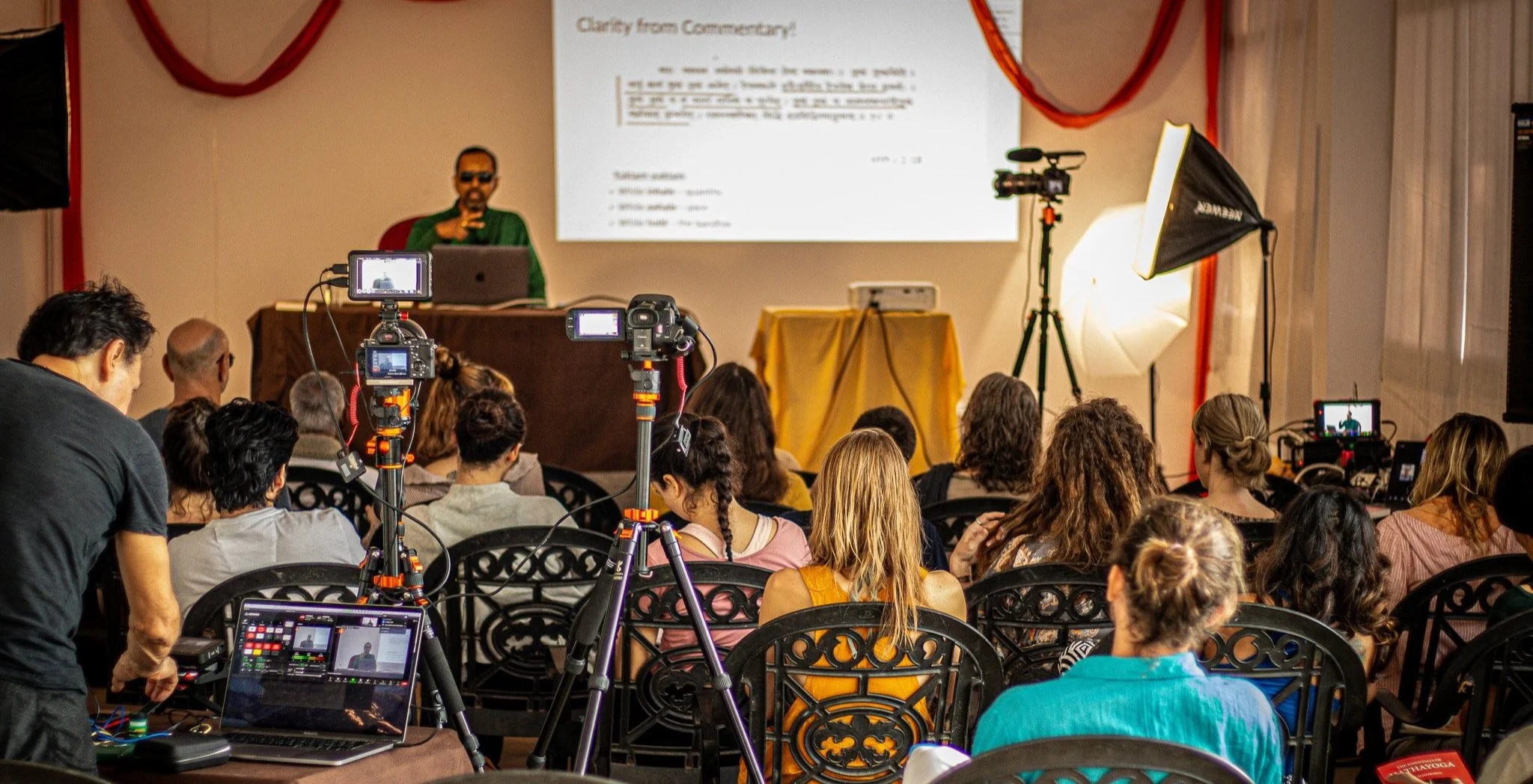
Study with the Sanskrit community of Mysore

Certification
Rooted, and recognized.
When you finish, you will receive a 200-hour certificate endorsed by Mysore Yoga Traditions, the Samskriti Foundation, and Yoga Alliance. The $108 examination fee supports manuscript preservation and charitable works in Mysore, India. For those who wish, you can register with Yoga Alliance for RYT 200 status.
An honest word
What 200 hours can and cannot do.
Becoming a yoga teacher is the work of many years. Real teaching comes from long practice, careful attention to other people, and study that does not end. No certificate produces that, and we will not pretend otherwise. We give the Yoga Alliance 200-hour credential because it is useful and widely recognized, along with a certificate directly from the Samskriti Foundation, which sits at the center of Mysore's scholarly community.
What this training gives, in our experience, is a thorough education in āsana, methodology, adjustment, and the philosophy and culture that produced the practice. Teachers with years behind them and people newer to yoga both tend to find something here they had not had before. Whether or not you ever share it with others, what you take from this year is a deeper relationship to a practice that asks for the rest of your life.
The tradition behind it
Who you study with.
You learn the practice from Andrew Eppler, the founder of Mysore Yoga Traditions, and you receive the philosophy from the Sanskrit scholars of Mysore themselves, in their own words.
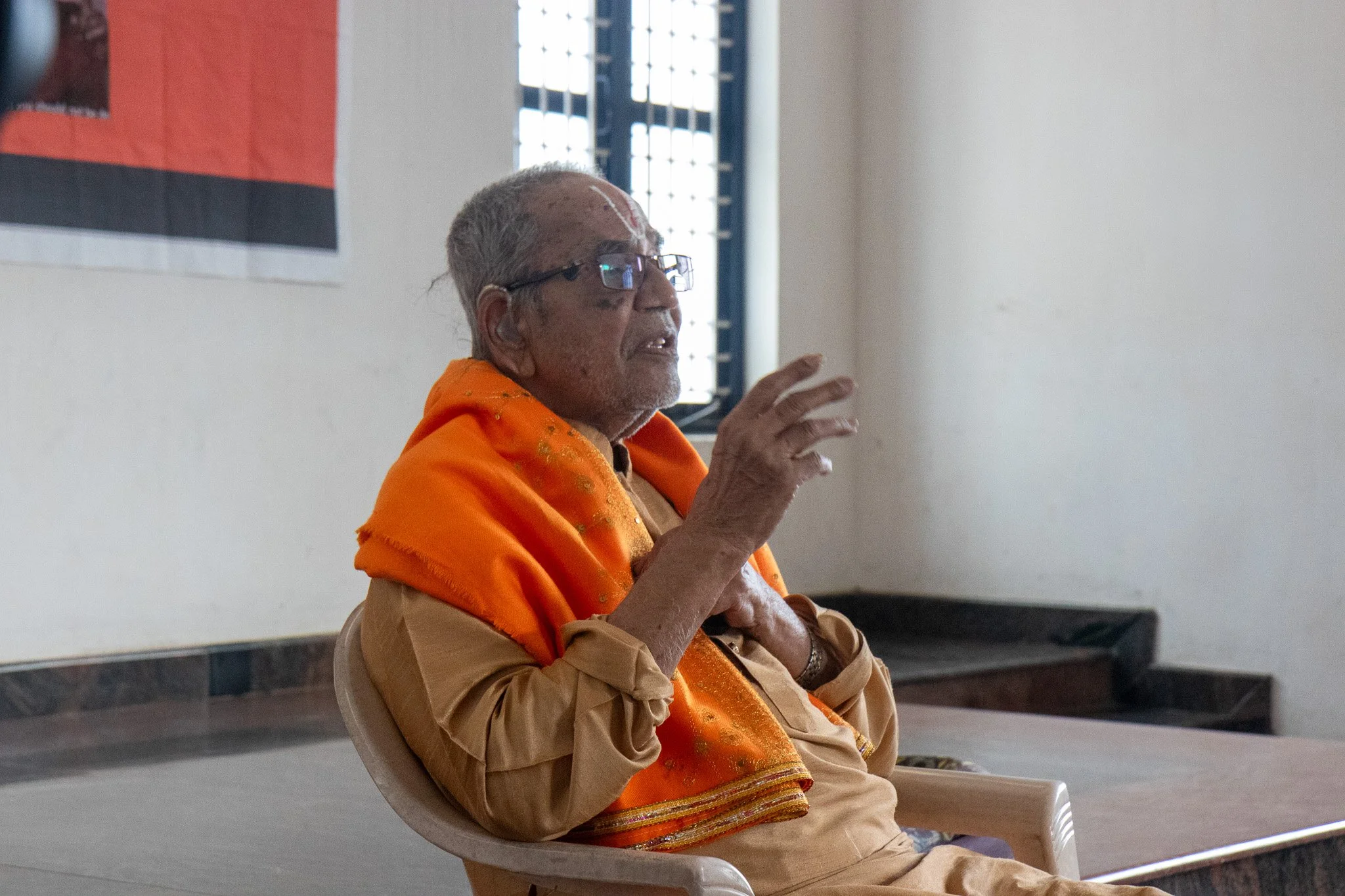
Sri B.N.S. Iyengar
Andrew's primary teacher in Mysore
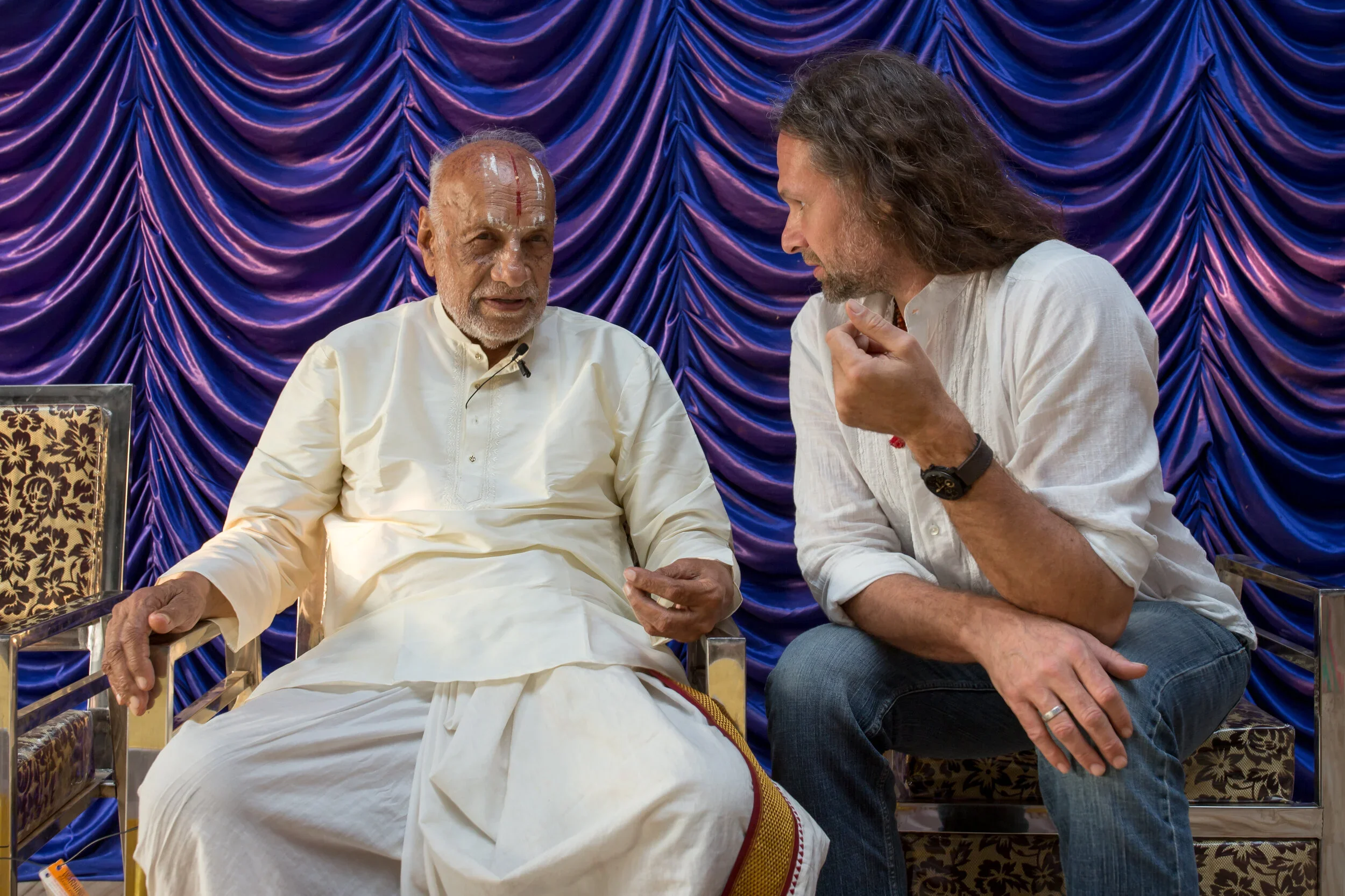
A direct student of Śrī Kṛṣṇamācārya, and the oldest living teacher of Ashtanga Yoga, he turns one hundred on September 19, 2026. He has been Andrew's primary teacher in Mysore for the last thirty-five years, and the vinyāsa method at the center of this training comes from him.
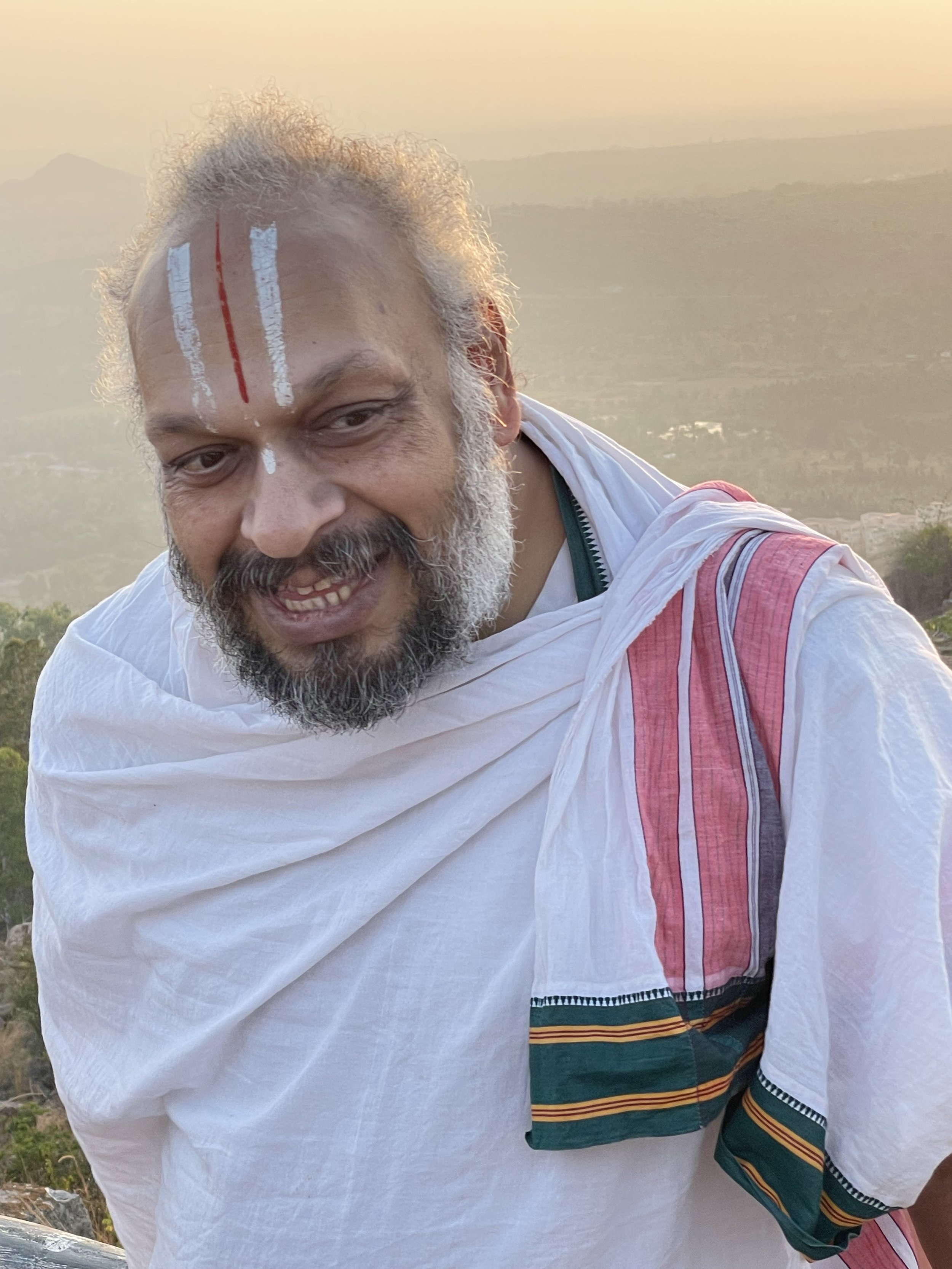
Dr. M. A. Alwar
Senior Professor, Maharaja's Sanskrit College
A Senior Professor at the Maharaja's Sanskrit College and an authority on Viśiṣṭādvaita. He teaches the Bhagavad Gita, the text closest to the heart of Mysore, and he gives the philosophy examination at the close of your study.
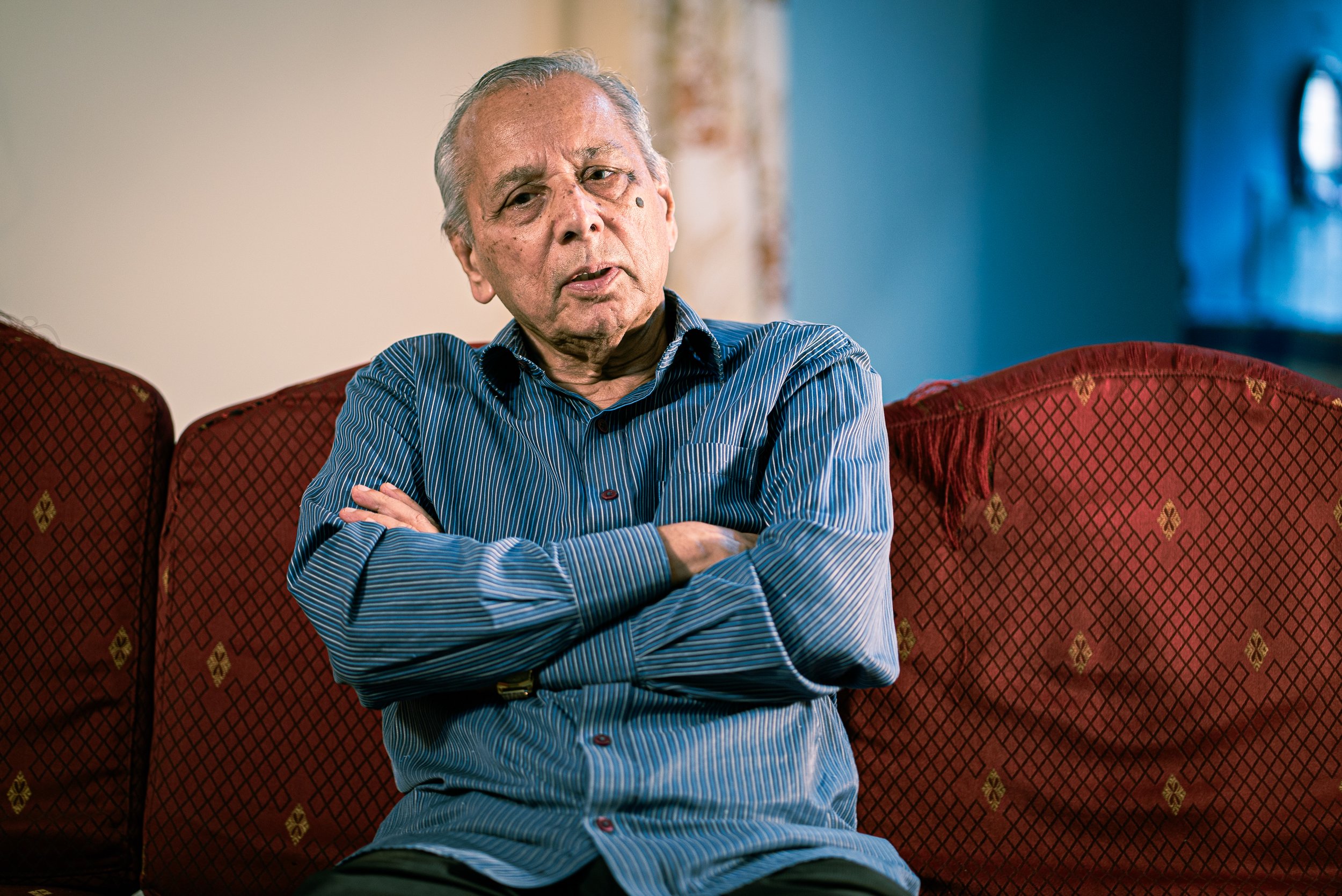
Dr. H. V. Nagaraj Rao
Sanskrit scholar
A grammarian of rare patience who teaches the Sankhya Karika and the Yoga Sutras one verse at a time, so the texts arrive not as doctrine but as something you can think with.
Andrew Eppler
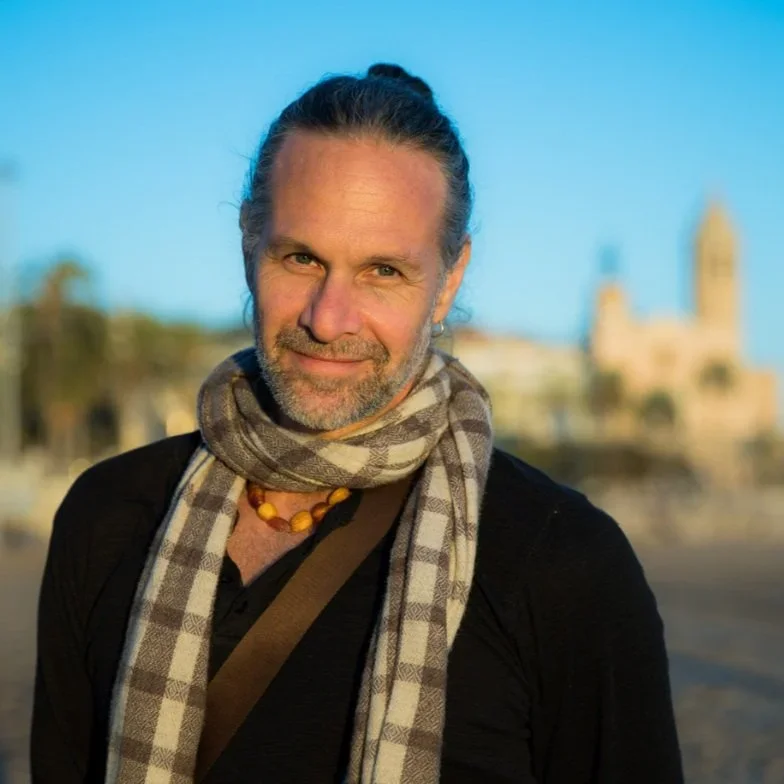
Andrew Eppler is the founder of Mysore Yoga Traditions. He has practiced yoga for forty years and taught for thirty-five, and first traveled to Mysore in 1990, where he has studied ever since with Śrī K. Pattabhi Jois, with Śrī B.N.S. Iyengar, and with the Sanskrit scholars of the city. An E-RYT 500, he built the annual Mysore Yoga Conference and has gathered an archive of teaching across decades, and much of his working life has gone to carrying this study to people who cannot travel to Mysore themselves. Read his full biography.
The lineage reaches back through Andrew's late teacher, Śrī Lakṣmīthāthāchārya Swami, Dr. Alwar's father, who held the Nāthamuni Sampradāya as its head until his final samādhi in May 2021.
In their words
From students.
Studying online with Andrew gave me something I never expected to have from my own home: a real seat with the scholars of Mysore, and a practice that finally made sense as a whole.
Lea Bender
I have studied in Mysore in person, and the care here is the same. The philosophy is not watered down for a Western audience. It is the real thing, taught by the people who hold it.
Kiki Flynn
See it for yourself
Mysore Yoga Traditions, the film.
Before you decide anything, watch the people you would be studying with. Our documentary brings you into the rooms where this tradition is still taught and still alive.
Questions
Before you enroll.
Do I need to be an experienced practitioner?
No. You need a sincere wish to study and the willingness to practice. The training builds the Primary Series up gradually from Sūrya Namaskāra, so you are not thrown into the deep end. Newer students and long-time practitioners both have a place here.
How much time does it take each week?
Plan on a daily practice of an hour or so, plus a few hours a week with the video lessons, which are made to play like a podcast while you go about your day. The program holds about nine months of material across a twelve-month window, so you set the pace.
Is the live teaching scheduled, or can I study on my own clock?
Mostly your own clock, and that is one of the best things about it. Everything you need to study is there in the materials, ready whenever you are. The video lessons and study sheets are yours to work through at any hour, in any time zone.
The live sessions are open to you whenever you want them, and no one takes attendance. I teach a live Primary Series class every Sunday at 11am US Central, and we hold a live training weekend once a month. You are welcome to drop in for as much as suits you. Depending on your time zone a whole weekend may not be realistic, and that is fine. Come for any part of it, and we would love to see you there.
How do I study the philosophy with the scholars?
The core philosophy is included as recorded lessons with Dr. H. V. Nagaraj Rao and Dr. M. A. Alwar. You may also join any live scholar course running during your year; write to me to register.
What do I get when I finish?
A certificate from the Samskriti Foundation in Mysore, with the philosophy examination given by Dr. M. A. Alwar. The training is also registered with Yoga Alliance as an RYS 200, so you are eligible to apply for RYT 200 registration. You also leave able to practice and to share the Primary Series with the philosophy behind it.
Can I pay monthly?
Yes. Paying in full is $1,700. The monthly plan is $150 a month for twelve months, $1,800 in all. A 4% transaction fee is added at checkout, and separately a required $108 final-examination fee is paid later, supporting the Samskriti Foundation.
What if I need to stop the monthly payments?
Write to me. We can pause the plan or work out something that fits your situation, and your access and your certificate are not in danger while we sort it out.
What if it is not the right fit for me?
There is a seven-day money-back guarantee, so you can begin and see how it sits with you. And if cost is the obstacle, write to me before you decide. We keep a real open door, and we will try to find a way.
Enroll
Take up the practice.
One path, three studies, a year of it, with the elders and scholars of Mysore and a teacher who has kept their company since 1990.
Two ways to pay
A 4% transaction fee is added at checkout. Separately, a required $108 final-examination fee is paid later, when you schedule the philosophy examination with Dr. Alwar; it supports the Samskriti Foundation.
You choose how to pay at enrollment. Seven-day money-back guarantee. If the cost is out of reach, write to me and we will find a way.
If it is calling you, come.
Prefer to talk first? Write to andrew@ashtangayogastudio.com or message +1 405 503 7779 on WhatsApp.
You can also study in person in Oklahoma, or join us for the immersion in Mysore.