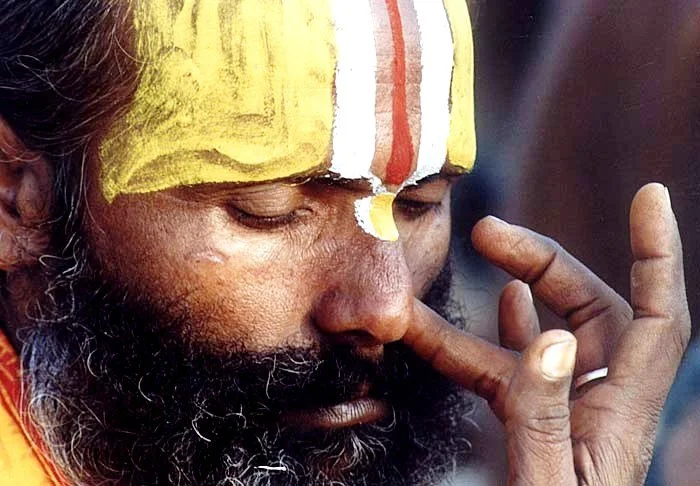
Pranayama
Practical Immersion
Dr. M. Jayaraman Ancient Techniques & Classical Descriptions
Learn to practice prāṇāyāma as it has been taught for centuries: ancient techniques alongside the classical descriptions that preserve them
Begins June 25, 2026 · 6am IST / 7:30pm CT · 16 weeks · $197 USD
Learn Pranayama at Its Source
Designed for practitioners and teachers ready to build an authentic prāṇāyāma practice grounded in the techniques and descriptions of the classical Yoga tradition.
The prāṇāyāma you encounter in modern yoga traces back through Śrī Kṛṣṇamācārya to the Haṭha Yoga texts, above all the Haṭhayogapradīpikā. But most practitioners learn these practices in fragments, without the techniques, descriptions, or context that the classical tradition preserves.
This course teaches you to practice prāṇāyāma as it has been transmitted for centuries. Dr. Jayaraman, who spent over a decade as Director of Textual Research at the Krishnamacharya Yoga Mandiram and trained as a direct disciple of Śrī S. Sridharan within that lineage, leads participants through the actual techniques. He draws on the classical descriptions of the Haṭhayogapradīpikā to clarify how each practice works and why. Students leave with a working foundation in prāṇāyāma, and enough knowledge to continue on their own.
Sage Patañjali presents Prāṇāyāma as the fourth limb of Aṣṭāṅga Yoga, a bridge between the external and internal limbs, that attenuates the veil covering inner illumination and renders the mind fit for Dhāraṇā. This course returns to that practice, and to the classical understanding that supports it.
What the Tradition Tells Us
The practice is illuminated by classical sources that describe both how prāṇāyāma works and what it accomplishes:
tataḥ kṣīyate prakāśāvaraṇam
Thereafter, the veil covering inner illumination becomes attenuated.
Yogasūtra 2.52 · Patañjalidhāraṇāsu ca yogyatā manasaḥ
And the mind attains fitness for Dhāraṇā (concentration).
Yogasūtra 2.53 · Patañjaliyāme yāme prāṇāyāmān daśa daśa kuryāt āyurvṛddhyai
Once in every three hours, practice Prāṇāyāma repeatedly for the enhancement of longevity.
Yogañjalisāram v. 22 · Yogācārya T. Śrī Kṛṣṇamācāryaprāṇāyāmair dahed doṣān
Through Prāṇāyāma, the doṣas are burnt away.
Śrīmad Bhāgavatam 3.28.11The Haṭhayogapradīpikā and the Aṣṭa Kumbhakas
The practice centers on the Aṣṭa Kumbhakas, the eight classical Kumbhaka practices of Haṭha Yoga described in the Hathayoga Pradipika. In the traditional understanding, the first six Kumbhakas are primarily associated with health promotion, purification, steadiness of body and mind, and psycho-physiological balance. Accordingly, these six practices will be taught and practiced in the program.
The final two Kumbhakas, which are traditionally linked with higher yogic attainments and advanced states of practice, will be introduced textually and conceptually, as they are generally not practiced in most contemporary Yoga traditions.
Dr. Jayaraman brings to these practices an authority few can claim: he has produced his own critical edition of the Haṭhayogapradīpikā, working directly with the Sanskrit manuscripts and traditional commentaries. He guides participants through each technique while drawing on the Jyotsnā Sanskrit commentary to clarify the classical descriptions, so the practice and the understanding deepen together.
Practice & Classical Description
Guided practice of the classical Kumbhakas of Haṭha Yoga
Traditional practice of Kapālabhāti and Nāḍī Śodhana as taught in the Haṭhayogapradīpikā
Direct practice of each technique alongside its classical description
A traditional perspective to inform your own prāṇāyāma practice
Classical descriptions of each practice from the Yogasūtras and Haṭha Yoga texts
Insights from the Jyotsnā Sanskrit commentary of the Haṭhayogapradīpikā
Padaccheda (word splitting) and traditional meanings of key terminology
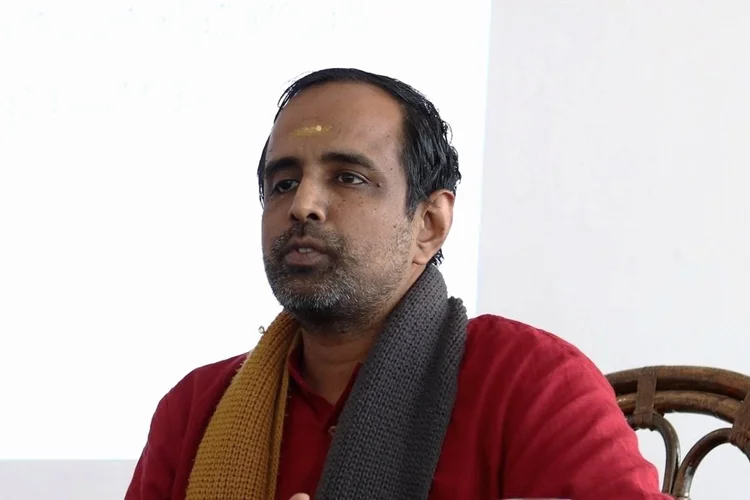
Dr. M. Jayaraman
Professor & Dean, Division of Yoga and SpiritualitySVYASA Deemed University
Dr. M. Jayaraman's formation began with seven years of traditional Gurukula education at Veda Vijnana Gurukulam in Bengaluru (1998-2005), studying Vedas, Vedānta, and Yogaśāstra under Prācārya Kotemane Ramachandra Bhat. He completed both his undergraduate and postgraduate degrees in Sanskrit with first rank and gold medal, and received his PhD from the University of Madras in 2010 with a dissertation on the Doctrine of Tantrayukti, the classical Indian science of text construction and methodology.
He is a direct disciple of Śrī S. Sridharan and served for over a decade as Director of the Research Department at the Krishnamacharya Yoga Mandiram, Chennai (2010-2021). That formation, within the institution Śrī Kṛṣṇamācārya himself established, under a teacher who carries that lineage directly, shapes everything Dr. Jayaraman brings to the study of Yoga texts. He is among the very few scholars working today who combines Gurukula-trained Sanskrit with deep immersion in the living Kṛṣṇamācārya tradition. Following his time at KYM, he served as Director of the Division of Textual Research in Yoga at the Indic Academy (2021-2022), and currently holds the position of Professor and Dean in the Division of Yoga and Spirituality at SVYASA Deemed University.
His published work spans twenty books and nineteen peer-reviewed journal articles on Yoga and Sanskrit literature. Among his most significant contributions is his own critical edition of the Haṭhayogapradīpikā, the primary textual source for this course, produced through direct engagement with the Sanskrit manuscripts and traditional commentaries. He conducts international workshops on Tantrayukti and has been nominated to various academic boards and government councils. In 2021, Karnataka Sanskrit University awarded him the Samskrita Grantha Puraskāra for his Sanskrit work Mantra-artha-cintanam.
Recent contributions include Yogasya Bhāṣā, a four-part self-learning series on Sanskrit and Yoga, and Yoga-Vaiśāradī, a searchable web repository of classical Yoga texts. More of his work can be found at his Academia.edu profile.
If you would like to know more about the living Mysore Yoga tradition that informs this course, visit our Paramparā page.
From Past Students
Mysore Yoga Traditions online courses have enabled me to study with some of India's great living yoga scholars. For those of us who can't regularly travel to India it is an opportunity we may not have had otherwise. Attending these classes has given me a deeper and richer experience of yoga.
Lea BenderI highly recommend the Mysore Yoga Conference and online courses. They enable me to continue learning with professors I first studied with in Mysore in the 90s, and to discover new, dedicated pandits.
Kiki FlynnA deep and comprehensive online study program, with knowledge straight from the heart of India. Lectures and information directly from incredible and inspiring scholars and original lineage. Highly recommend for those wanting to go beyond just asana practice.
Rachel Butler · Oklahoma CitySecure Your Place
Payment is processed securely through Stripe.
Enroll NowSecure checkout ◆ All major cards accepted
AFTER PAYMENT FILL OUT THE FORM BELOW TO RECEIVE ZOOM LINKS (THEY WILL BE SENT THE DAY THE COURSE BEGINS)
Few opportunities exist to learn authentic prāṇāyāma practice from a scholar who carries the living Kṛṣṇamācārya tradition. This is one of them.
◆ Explore All Online Studies ◆